UTCAL Summit 2025
Traditional terrestrial networks are not always capable of meeting the connectivity demands required by power utility companies, especially in remote and hard-to-reach areas. In this context, the integration of terrestrial and non-terrestrial networks (NTN) emerges as a promising solution.
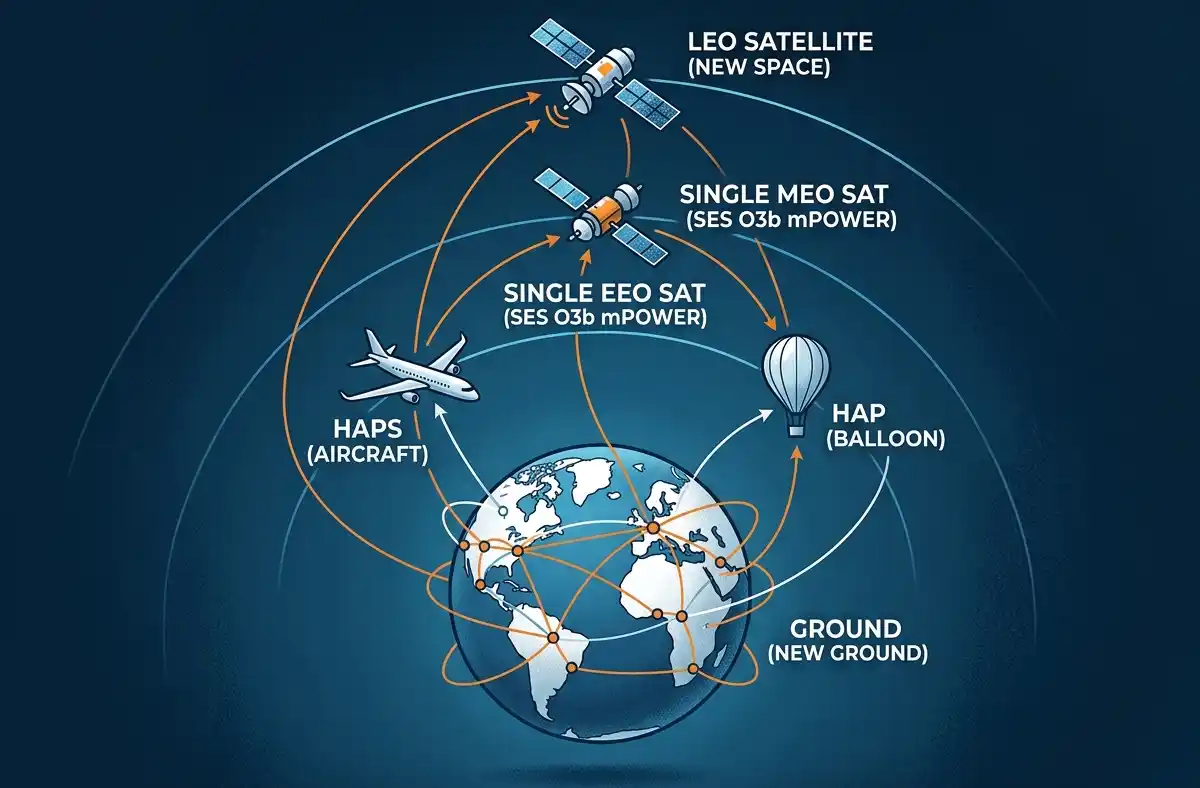
NTN networks, which include space systems (satellite constellations in GEO—Geostationary, high altitude, LEO—low Earth orbit, and MEO—medium Earth orbit) and emerging aerial systems (stratospheric balloons, autonomous electrically propelled aircraft, and drones), offer a robust alternative to guarantee connectivity in regions where terrestrial infrastructure is limited.
The importance of this technology was recognized by the 3GPP, the primary mobile communications standardization body, in Releases 16, 17, and 18. These releases introduced and enhanced functionalities to integrate NTNs into the 5G system, adapting physical layer procedures and network architectures to handle specific challenges, such as long propagation delays and Doppler shifts.
Among the benefits of this integration are rapid deployment, broad coverage, and network resilience. These advantages are especially relevant for public power generation and distribution utilities, which require reliable communications to monitor and manage their operations in real time, even in remote areas.
However, the integration of NTN and terrestrial networks is not without its challenges. Technical issues such as latency, handover, and interference, as well as standardization and interoperability, represent significant barriers. Furthermore, regulatory frameworks and business models must be developed to make this integration viable.
In short, this presentation aims to demystify the universe of NTN systems and their impact on the future of telecommunications, particularly on utility infrastructure. By exploring the concepts, benefits, and challenges of this integration, we hope to offer a clear vision of the opportunities and paths forward to make this technology a reality.
The presentation slides can be obtained by clicking here (attached PDF file).