Waldo Russo
The document presents a comprehensive analysis of the transforming role of Artificial Intelligence (AI) in the electricity sector, covering everything from operational applications to real cases of adoption by global utilities.
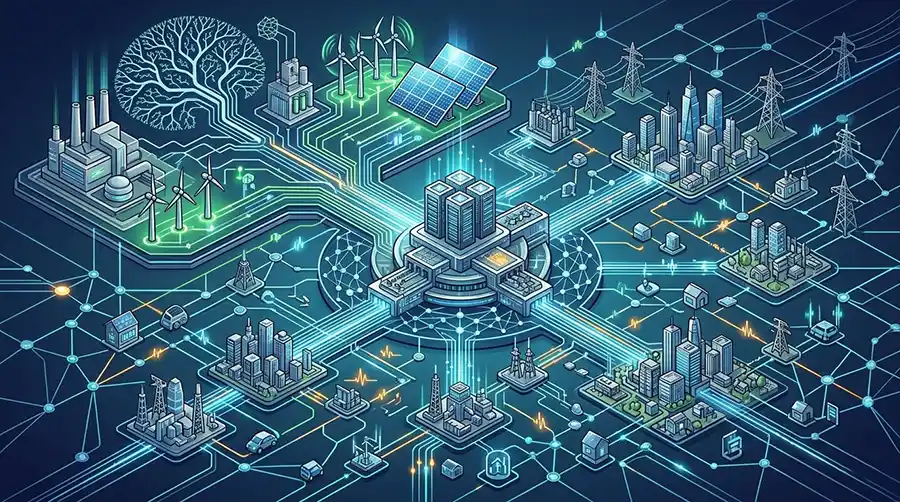
In power generation, AI operates in demand forecasting, the efficient management of intermittent renewable sources (solar and wind), carbon emission reduction, predictive maintenance of turbines and generators, and real-time control of hydroelectric plants. In distribution, the technology enables smart grids (Smart Grids) with continuous monitoring, blackout prevention, integration of distributed generation and electric vehicles, as well as the reduction of technical losses and fraud prevention.
The work also highlights the impact of AI on customer relations—through dynamic tariffs, chatbots, and consumption management tools—and its role in environmental sustainability, accelerating the energy transition and long-term planning. The challenges of this adoption are also discussed: cybersecurity, implementation costs, dependence on data quality, and the need for workforce retraining.
To substantiate the analysis, the document features ten practical success cases from global utilities, including Duke Energy (USA), Enel (Italy), National Grid (UK), Iberdrola (Spain), Xcel Energy (USA), China Southern Power Grid, EDF (France), AES Corporation, and the Brazilian companies CPFL Energia and Eletrobras. The conclusion reinforces that AI is already generating concrete results in efficiency, cost reduction, and sustainability, serving as an essential element to face the future challenges of the power sector.