Waldo Russo
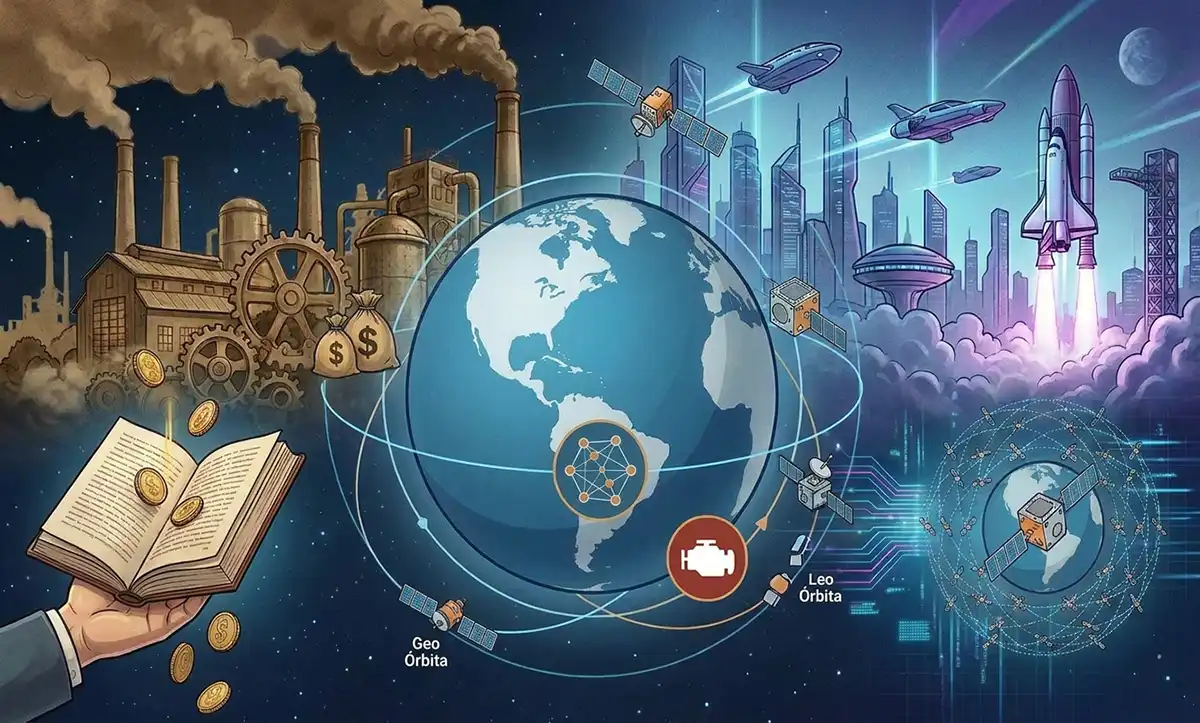
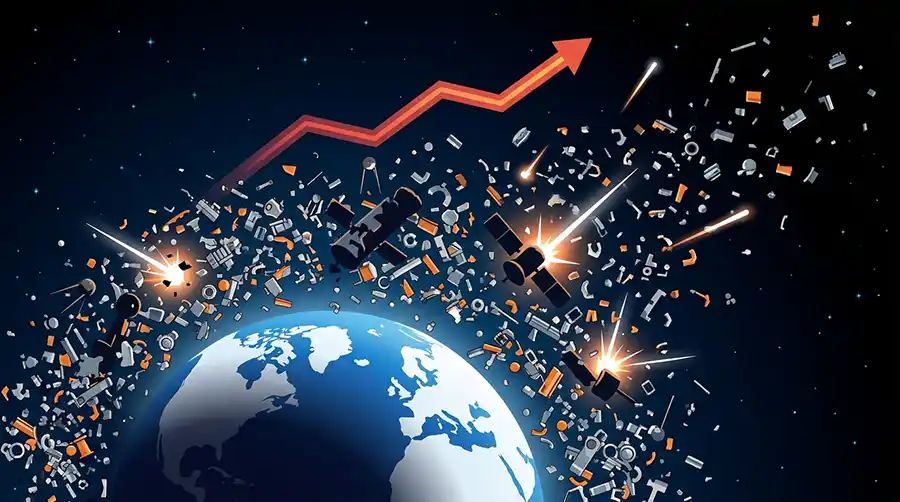
This technical document addresses the growing problem of overcrowding in Low Earth Orbit (LEO) and the risks associated with the so-called Kessler Syndrome—a phenomenon of cascading collisions between orbital objects. The analysis covers five seminal works published between 1978 and 2026, articulating a historical and prospective view of the subject. It starts with the original theoretical framework of Kessler and Cour-Palais (1978), moves to MIT’s MOCAT-3 source-sink model (2022), which calculates a theoretical orbital capacity of up to 12.6 million active satellites, and advances through the documentation of current megaconstellations and their operational impacts. It presents recent evidence (IEEE Spectrum, 2025) that the syndrome is already underway between 520 and 1,000 km in altitude, and introduces the CRASH Clock (2026), an indicator that measures the expected time until a collision if evasive maneuvers cease—a metric that dropped from 164 days (2018) to just 2.5 days (May 2026). The text concludes by advocating for three complementary fronts of action: intensive mitigation, active debris removal, and coordinated global governance of the orbit as a common resource.